💧 Basement Waterproofing in Des Moines, IA
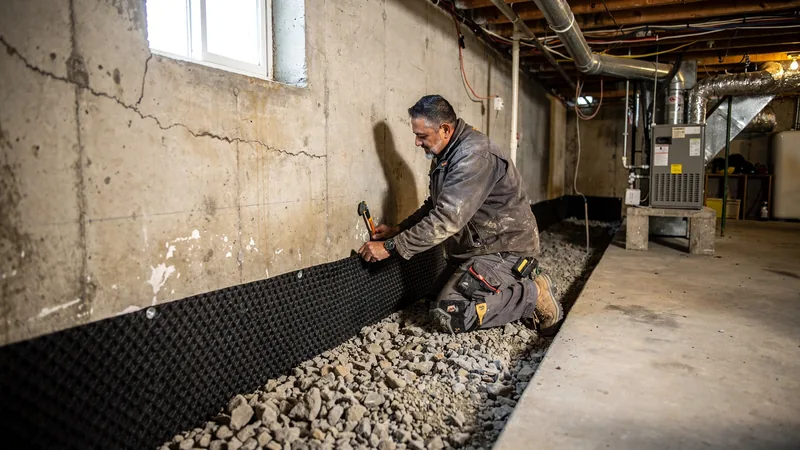
Des Moines Basement Pros provides basement waterproofing in Des Moines, IA.
Free Estimates · Drain Tile & Sump Pumps · Radon Mitigation
Keeping groundwater and rainwater out of the basement through drains, a sump pump, crack sealing or an exterior membrane.
Fixr lists most basement waterproofing jobs between $3,000 and $10,000, about $5,000 on average or $3 to $10 per square foot (February 2026), and This Old House puts interior systems near $3,000 and exterior work at $7,000 or more (March 2026). In Des Moines the median home was built in 1961 and about 49% of homes are older than 1960 (ACS 2024 5-year), while most homes in Ankeny, Waukee and Grimes are under 25 years old. Both groups get wet basements, for different reasons, so the fix starts with where the water shows up.
Reading the Water
Water that appears at the joint between wall and floor after a soaking rain usually means pressure from saturated soil. Water through a single crack points to that crack. A damp band near the top of a wall often traces to a gutter or a low spot by the house. Water rising from the floor drain is a sewer issue, handled with a backwater valve or a lateral repair. Photos and dates of each event help the provider separate these causes.
Old City Homes vs. New Suburbs
In older Des Moines neighborhoods, block or clay-tile walls may lack a working footing drain, and interior drain tile is a common answer. In newer suburbs, builders install drain tile and a sump pit, so leaks often come from a pump that cannot keep up, a discharge line that ends too close to the house, or settled backfill. Read more in why newer suburban basements still leak.
Frequently Asked Questions
How much does basement waterproofing cost in Des Moines?
National cost guides put most jobs between $3,000 and $10,000, about $5,000 on average (Fixr, February 2026), with interior systems near $3,000 and exterior work at $7,000 or more (This Old House, March 2026). No guide publishes Des Moines-only prices; a local provider prices your basement after an inspection.
How much does a radon mitigation system cost?
HomeGuide lists $1,200 to $2,000, about $1,600 on average, for an active soil depressurization system (2026). Price depends on the foundation type, whether there is a crawl space or a sump to seal, and where the vent pipe runs.
Is radon a problem in Des Moines?
It is common across Iowa. Iowa HHS reports that the Iowa Radon Survey found 71.6% of homes above the EPA action level of 4 pCi/L, the largest share of any state, and that EPA designates all of Iowa as radon zone 1. Testing is the only way to know a specific home's level.
Should I fix the water first or the radon first?
If both are planned, plan them together. Cutting the floor for drain tile, sealing cracks and adding a sealed sump lid all affect radon entry, and a radon system can draw from under the slab or from a sealed sump. Ask for one plan and test radon again after the basement work is done.
My house is only ten years old. Why is the basement wet?
Newer homes usually have drain tile and a sump pump, so leaks often come from backfill that has settled into a dip along the wall, downspouts that empty next to the house, a discharge line that ends too close, or a pump that cannot keep up in heavy rain. These are often cheaper fixes than a new drain system.
What does a horizontal crack in a block wall mean?
A long horizontal crack near mid-height of a block wall often means soil pressure is pushing the wall inward. Measure and photograph it, and have it assessed: options range from carbon fiber straps and wall anchors to steel beams or, for walls that have moved far, a rebuild.
Does homeowner's insurance cover a wet basement?
It depends on the cause and the policy. Groundwater seepage is often excluded, sewer backup usually needs a separate endorsement, and river or surface flooding is covered by flood insurance, not a standard policy. Ask your agent which endorsements you have before water season.
Where should my sump pump discharge?
Away from the foundation, onto ground that drains away from the house and not onto a neighbor's lot or the sidewalk, and never into a floor drain or laundry tub that leads to the sanitary sewer. In winter, a freeze-relief fitting near the house keeps a frozen line from backing water into the pit.
Do I need a permit for basement waterproofing or foundation work?
Simple interior drain tile and crack injection often do not; structural work such as a wall rebuild, piers and egress windows usually does, and plumbing work such as a backwater valve generally needs a plumbing permit. Rules differ between Des Moines and each suburb, so ask the provider who files the permit and confirm with your city.
How long does interior drain tile take to install?
A partial run on one wall can be finished in a day; a full perimeter in a typical basement often takes two to three days, plus curing time for the new concrete strip. Finished basements take longer because walls and flooring have to come out first.
What areas does this site cover?
Des Moines, West Des Moines, Ankeny, Urbandale, Johnston, Clive, Altoona, Windsor Heights, Indianola and Norwalk, plus Waukee, Grimes, Pleasant Hill, Bondurant, Carlisle, Polk City, Adel and Mitchellville. Availability for your address is confirmed when a provider contacts you.
What should a written basement quote include?
The cause the provider found, the method, the linear feet of drain or number of anchors, straps or piers, the pump make and model, where the discharge ends, floor patching, any radon fan and pipe route, permits and who pulls them, cleanup, and the written workmanship and manufacturer warranties.