Waterproofing in Des Moines, IA
Des Moines Basement Pros connects homeowners in Des Moines and the surrounding area with local waterproofing providers.
📞 Call (515) 303-4161Services Available in Des Moines
- Basement Waterproofing
- Interior Drain Tile
- Exterior Basement Waterproofing
- Wet Basement Repair
- Sump Pump Installation
- Sump Pump Replacement
- Battery Backup Sump Pump
- Sump Discharge Line & Freeze Protection
- Downspouts, Grading & Yard Drainage
- French Drain Installation
- Foundation Crack Repair
- Foundation Repair
- Bowing Basement Wall Repair
- Wall Anchors
- Carbon Fiber Wall Straps
- Piers & Underpinning
- Basement Wall Rebuild
- Crawl Space Encapsulation
- Basement Dehumidifier
- Radon Mitigation
- Radon Testing
- Egress Window Installation
- Backwater Valve & Sewer Backup
Des Moines has about 212,400 residents (American Community Survey 2024 5-year). The median home was built in 1961, about 49% of homes predate 1960 and about 27% predate 1940, which places many basements in block or clay-tile walls more than sixty years old. About 60% of occupied homes are owner-occupied, with a median value of $194,700.
Des Moines International Airport records a normal 36.55 inches of precipitation a year, with May (5.24 inches) and June (5.26 inches) the wettest months (NOAA, 1991-2020). In July 1993 the Raccoon River crested at 26.8 feet and flooded the Des Moines Water Works treatment plant, leaving about 250,000 people without running water for days (Des Moines Public Library). Radon is the other basement question here: Iowa HHS reports that 71.6% of homes in the Iowa Radon Survey were above the EPA action level.
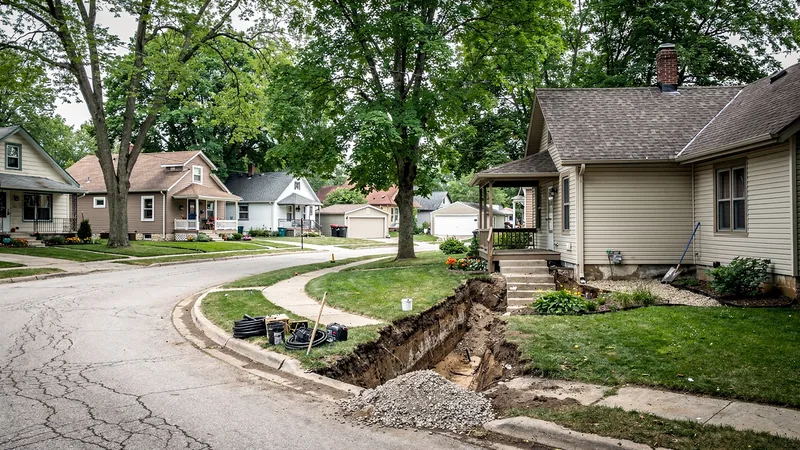
Older Basements and Spring Storms in Des Moines, Iowa
Des Moines: Key Facts and Sources
| Population | About 212,400 (212,421) (Source: U.S. Census Bureau, American Community Survey (2024 5-year), via Census Reporter) |
|---|---|
| Age of homes | Median year built 1961; about 49% built before 1960 (47,800 of 97,604 housing units) (Source: U.S. Census Bureau, American Community Survey (2024 5-year), via Census Reporter) |
| Owner-occupied homes | About 60% (54,506 of 90,105); median home value $194,700 (Source: U.S. Census Bureau, American Community Survey (2024 5-year), via Census Reporter) |
| Normal precipitation | 36.55 inches a year; about 66 days with 0.10 inch or more; May 5.24 in. and June 5.26 in.; about 128 days with a low at or below freezing; 36.5 inches of snow (Des Moines International Airport, 1991-2020) (Source: NOAA National Centers for Environmental Information, U.S. Climate Normals 1991-2020 (Des Moines International Airport)) |
| Radon | Iowa Radon Survey: 71.6% of homes above the EPA action level of 4 pCi/L, the largest share of any state; all of Iowa is EPA radon zone 1 (Source: Iowa Department of Health and Human Services, Radon Resources) |
| Radon in a home sale | No state rule requires testing or mitigation in a sale; sellers must disclose known radon tests (Iowa Code 543B.9, 543B.18; IAC 193E ch. 14) (Source: Iowa Department of Health and Human Services, Radon Resources) |
| Flood of 1993 | Raccoon River crested at 26.8 feet on July 11, 1993 and flooded the Des Moines Water Works treatment plant (Source: Des Moines Public Library, Project Des Moines: The Flood of 1993) |
| Glacial soils | Des Moines sits at the southern end of the Des Moines Lobe, the last glacial advance into Iowa; its till is a calcareous clay loam (Source: Iowa Geological Survey, surficial geologic map open-file reports (Des Moines Lobe)) |
ZIP codes covered: 50309, 50310, 50311, 50312, 50313, 50314, 50315, 50316, 50317, 50320, 50321
Nearby Areas We Serve
Waterproofing in Des Moines: Questions
Does Des Moines require a radon test when I sell my house?
No. Iowa HHS states there is no state rule requiring radon testing or mitigation in a real estate transaction, but a seller must disclose any known radon tests under Iowa Code chapter 543B and Iowa Administrative Code 193E chapter 14. Many buyers ask for a test during the inspection period.
Why do so many Des Moines basements take on water in late spring?
May and June are the two wettest months at Des Moines International Airport, each about 5.2 inches in a normal year (NOAA 1991-2020), and the soil is often already wet from snowmelt and April rain. Saturated clay soil presses water against the basement walls and the floor joint, and sump pumps run the hardest in this season.