Musty Basement Smell: Humidity, Mold and Hidden Leaks
A musty smell comes from mold and mildew growing on damp materials: cardboard, carpet, drywall paper and wood. The moisture comes from one of three places: a leak, ground moisture through the slab and walls, or humid summer air condensing on cool basement surfaces.
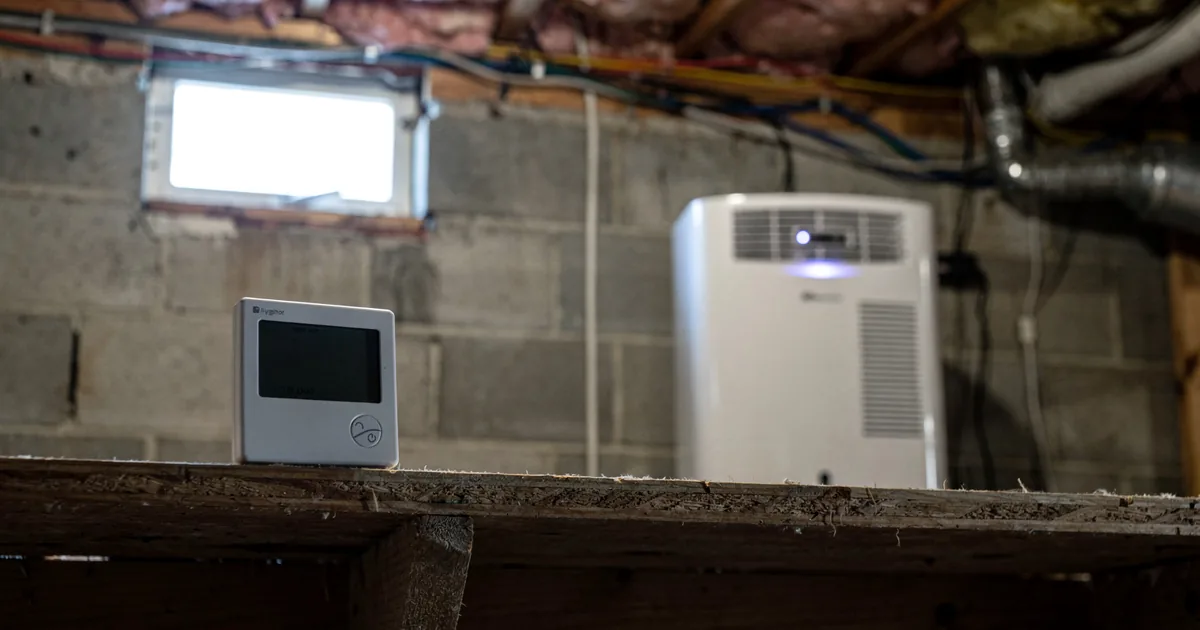
Measure. A hygrometer costs little. EPA recommends indoor humidity below 60 percent, ideally 30 to 50 percent. Readings above 60 percent in summer point to humidity; damp spots along one wall point to a leak.
Humidity. A properly sized basement dehumidifier that drains automatically, at $1,000 to $2,800 installed (Fixr, February 2026), handles condensation. Keep stored items off the floor and away from walls.
Leaks. Stains at the floor joint, efflorescence and peeling paint mean water is coming through. See wet basement repair.
Mold cleanup. EPA guidance says a homeowner can usually clean an area under about 10 square feet; larger areas call for a professional. Fix the moisture first or the mold returns.
Crawl spaces. A damp crawl space next to a basement can feed the smell into the house. See crawl space encapsulation.